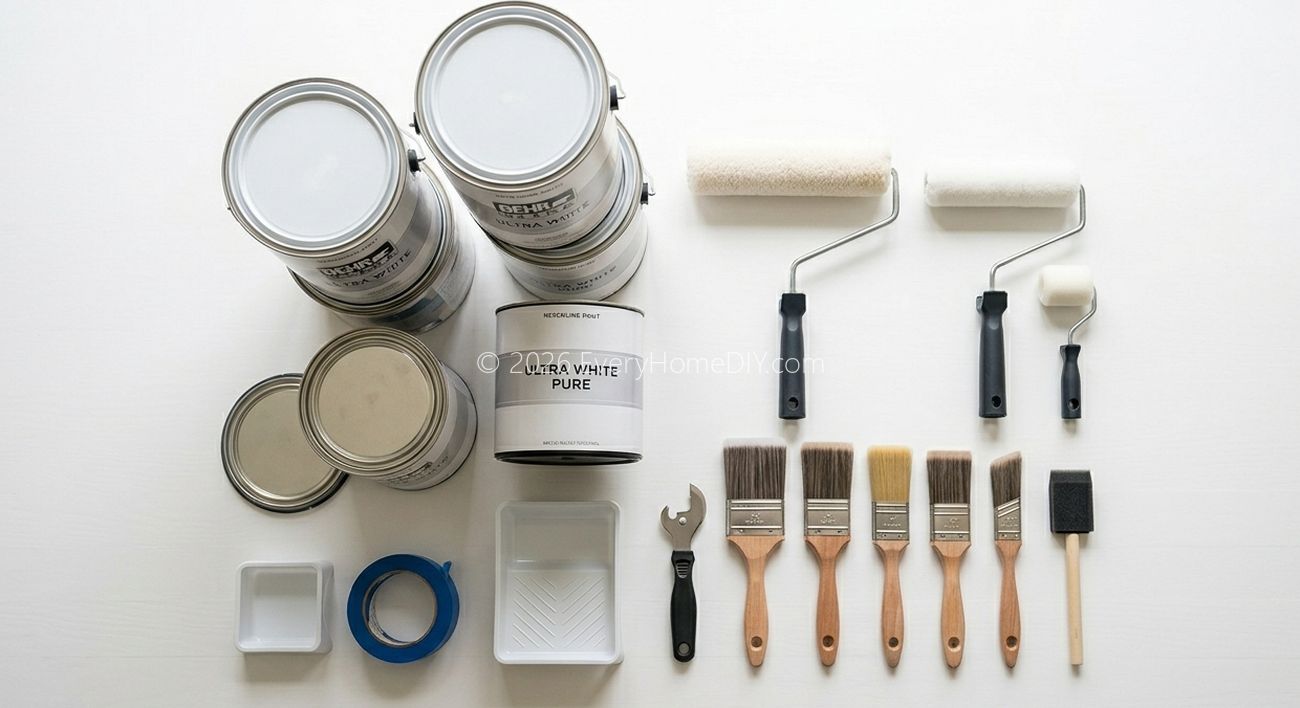
Why Your Paint Roller Matters More Than You Think
Most DIY painters spend hours choosing the perfect paint color and barely think about their roller. This is a mistake. A cheap, lint-shedding roller leaves fibers embedded in your walls, creates an uneven texture, and forces you to apply more coats than necessary. A quality roller lays paint evenly, releases it smoothly, and makes the difference between a DIY-looking job and a professional finish.
Understanding Roller Nap (Pile) Thickness
- 3/16 – 1/4 inch nap: Perfectly smooth surfaces like doors and trim
- 3/8 inch nap: Smooth to slightly textured walls — the most common choice for interior rooms
- 1/2 inch nap: Lightly textured or orange-peel walls
- 3/4 – 1 inch nap: Heavy texture, stucco, brick, or rough surfaces
For most interior rooms with standard drywall, a 3/8-inch nap is the right choice.
1. Wooster Brush R017-9 — Best Overall
Wooster has been making professional painting tools since 1851, and the R017-9 is their flagship roller cover. The woven polyester fabric holds more paint than cheaper alternatives and releases it uniformly, eliminating the streaking that frustrates most DIYers. It's essentially lint-free out of the package — a common complaint with budget rollers. Available in 4-packs for excellent value.
Best for: Interior walls, ceilings, standard drywall
Nap: 3/8 inch | Price: ~$18–22 for 4-pack
2. Purdy White Dove — Best for Smooth Finish
Purdy's White Dove is the roller of choice for painters who want the smoothest possible finish. The white woven fabric is virtually lint-free and designed specifically for flat and eggshell paints on smooth surfaces. It leaves a fine, even texture that's nearly impossible to distinguish from sprayed finishes.
Best for: Doors, smooth walls, high-gloss paints
3. Shur-Line 3100C — Best Budget Roller
At under $5 per cover, the Shur-Line 3100C won't match Wooster or Purdy in performance, but for a single-room project where you don't want to clean the roller afterward, it's a solid disposable option. Better than the generic foam rollers at big-box stores.
Pro Tips for Using Any Roller
- Pre-wet your roller before painting with water (for latex) to help paint absorb evenly
- Remove lint first by rolling tape over a new cover to pull off loose fibers
- Don't overload the roller — excess paint causes drips and spattering
- Use a roller screen in a 5-gallon bucket instead of a standard tray for larger rooms — it holds more paint and lets you reload faster
- Maintain a wet edge — always roll into your freshest paint to avoid lap marks
Our Pick
For almost every interior painting project, buy the Wooster R017-9 in a 4-pack. It costs a few dollars more than generic options but delivers noticeably better results. The difference shows on the wall.