Why Chemical Drain Cleaners Are a Bad Idea
Chemical drain cleaners (Drano, Liquid-Plumr) work by creating an exothermic chemical reaction that burns through hair and grease. The problem: the same reaction damages PVC pipes, corrodes metal fittings, and eats through the rubber seals in your P-trap. A plumber will charge $150–300 to fix the damage that years of chemical drain use cause. Mechanical methods are faster, more permanent, and safe for all types of pipes.
Identify Your Clog Type
- Slow-draining sink: Usually hair and soap scum buildup in the stopper and P-trap
- Complete blockage in one drain: Localized clog — usually close to the drain opening
- Multiple drains slow or backing up: Main line clog — call a plumber
- Gurgling from floor drains when using other fixtures: Venting issue or main line problem — call a plumber
Tool 1: Drain Snake (Most Important Tool to Own)
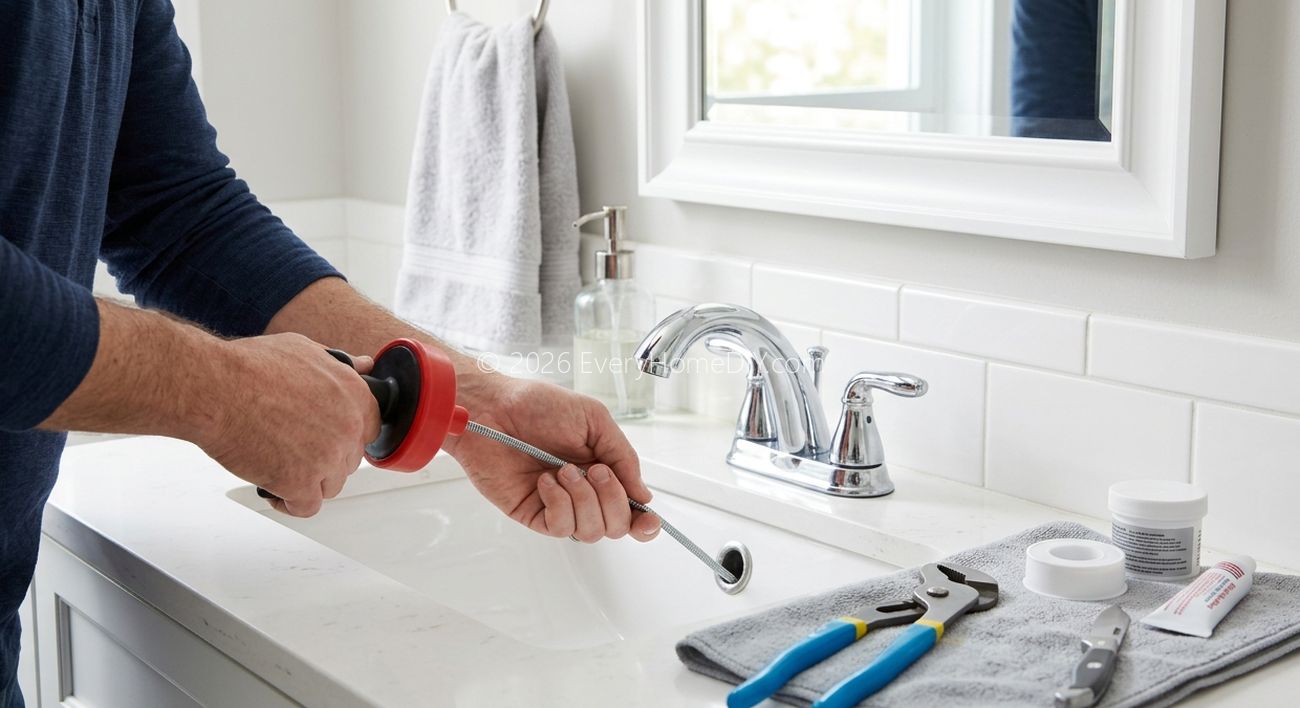
A 25-foot hand-cranked drain snake handles 95% of household clogs. Feed it into the drain until you feel resistance, then crank clockwise to catch the clog, and pull it out. The first time you use one, you'll be amazed at what comes out. Every home should have one.
Best pick: Ridgid 41408 Hand Spinner — 25 ft, durable steel drum, easy to use and clean. Under $30 on Amazon.
Tool 2: Zip-It Drain Cleaning Tool
The Zip-It is a 20-inch flexible plastic strip with barbs that catches hair and pulls it out of bathroom drains. It's specifically designed for the hair-and-soap clogs that block bathroom sink and shower drains. At around $3, it's the most cost-effective drain tool you can buy.
Tool 3: Plunger (Cup vs. Flange)
Most people own the wrong plunger. The red cup plunger is for sinks — not toilets. Toilet clogs require a flange plunger (the one with the rubber flap inside the cup) that creates a seal in the curved toilet drain. For sink clogs, always plug the overflow drain with a wet rag before plunging to build proper pressure.
Step-by-Step: Unclog a Bathroom Sink
- Remove the stopper — most lift straight out or unscrew counterclockwise. Clean off the hair and debris
- Insert the Zip-It tool down the drain opening and pull out hair
- Run hot water — if still slow, use the drain snake
- If still blocked, remove and clean the P-trap under the sink (place a bucket first)
Step-by-Step: Unclog a Shower Drain
- Remove the drain cover (usually pries up or has a visible screw)
- Use the Zip-It to pull out hair accumulation
- Follow with the drain snake if needed
- Flush with boiling water to clear soap residue
Prevention
Install a mesh drain hair catcher in every shower and bathroom sink drain. They cost $5–10 and prevent 90% of bathroom drain clogs. Rinse them weekly — takes 10 seconds. Worth every penny.